ENERGY CONSUMPTION REVIEW AND ANALYSIS AT UNIVERSITI ISLAM MELAKA (UNIMEL)
Universiti Islam Melaka (UNIMEL) conducts periodic monitoring and reviews of electricity consumption as part of its ongoing efforts to improve energy efficiency and identify opportunities to reduce overall campus energy usage. This process aims to assess electricity consumption trends, identify changes in usage patterns, and support the university in planning appropriate energy-saving measures.
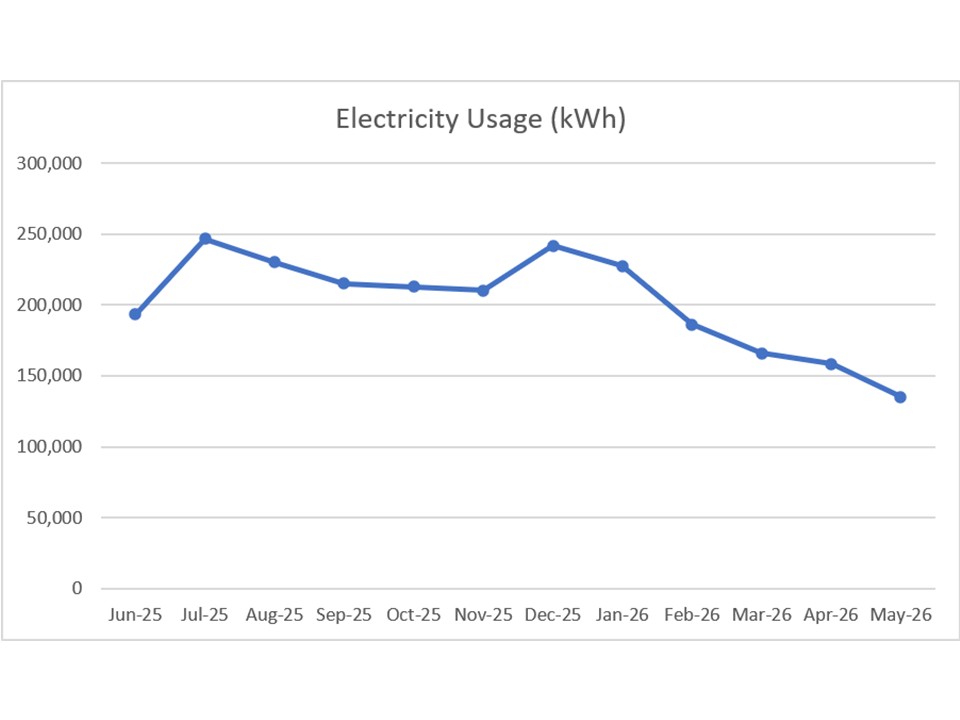
Based on the electricity consumption analysis from June 2025 to May 2026, UNIMEL recorded a notable downward trend in energy consumption during the latter part of the monitoring period. Electricity consumption reached its highest level in July 2025, at approximately 247,000 kWh, before gradually declining over the subsequent months. Although a temporary increase was observed in December 2025, electricity consumption continued to decrease from January 2026 onwards, reaching its lowest level in May 2026 at approximately 135,000 kWh.
Overall, electricity consumption in May 2026 was approximately 30% lower compared to June 2025. This downward trend provides a positive indication of the university’s efforts to manage energy consumption and optimize facility operations.
UNIMEL’s energy management approach focuses on responsible electricity usage, air-conditioning management, efficient lighting practices, electrical equipment management, and the optimization of building and space utilization according to operational requirements. Continuous monitoring of electricity consumption also enables the university to identify periods of higher energy demand and determine where further inspections of campus facilities may be necessary.
These efforts align with Sustainable Development Goal (SDG) 7: Affordable and Clean Energy, which emphasizes improvements in energy efficiency. Through regular electricity consumption reviews and monitoring, UNIMEL aims to strengthen energy management, minimize electricity wastage, and improve the efficient utilization of energy resources. This approach also supports the aspirations of the Smart Melaka Blueprint 2035 for smarter, resource-efficient, and sustainable development.
The findings from these energy reviews will serve as a basis for continuous improvement, including identifying buildings or spaces with higher electricity consumption, conducting inspections of electrical equipment usage, and evaluating the effectiveness of energy-saving initiatives over time.